Tesla Optimus: The Complete Guide to Tesla's Humanoid Robot and How It Works
Tesla Optimus is one of the most ambitious robotics projects ever announced. Developed by Tesla, the humanoid robot is designed to perform repetitive, dangerous, and physically demanding tasks that people would rather avoid. By combining advanced artificial intelligence, computer vision, robotics, and autonomous technologies, Tesla aims to create a robot capable of assisting in factories, businesses, and eventually homes.
As robotics continues to evolve, Tesla Optimus has become a major topic among technology enthusiasts, businesses, and researchers. Although still under active development in 2026, Optimus demonstrates how AI-powered robots may transform industries and daily life.
This guide is based on industry-recognized AI research, educational resources, and current technology developments.
Featured Snippet
Tesla Optimus is a humanoid robot developed by Tesla that uses artificial intelligence, computer vision, advanced sensors, neural networks, and electric actuators to perform human-like tasks. It is designed to improve productivity, reduce workplace injuries, and automate repetitive work across manufacturing, logistics, healthcare, and other industries.
Table of Contents
- What Is Tesla Optimus?
- How Tesla Optimus Works
- AI Technologies Behind Tesla Optimus
- Hardware and Robot Design
- Real-World Applications
- Benefits of Tesla Optimus
- Challenges and Limitations
- The Future of Tesla Optimus
- Frequently Asked Questions
- Disclaimer
- Final Thoughts
What Is Tesla Optimus?
Tesla Optimus, sometimes called the Tesla Bot, is a general-purpose humanoid robot introduced by Tesla to perform tasks traditionally completed by humans. Unlike industrial robots that remain fixed in one location, Optimus is designed to walk, carry objects, manipulate tools, and interact safely with people.
The robot builds upon Tesla’s experience in electric vehicles and autonomous driving. Many of the technologies powering Tesla cars—including AI chips, computer vision systems, neural networks, and software optimization—are adapted for use in Optimus.
Its human-like form allows it to operate in environments already designed for people. Instead of redesigning factories or warehouses for specialized robots, businesses can potentially deploy Optimus wherever human workers currently perform repetitive tasks.
How Tesla Optimus Works
Tesla Optimus combines several advanced technologies into one intelligent robotic system.
At its core is artificial intelligence that processes information from multiple cameras and sensors. Similar to Tesla’s autonomous vehicles, Optimus continuously analyzes its surroundings to identify objects, estimate distances, recognize obstacles, and plan safe movements.
The robot’s onboard computer processes visual information in real time using deep neural networks. These AI models help Optimus understand its environment and make decisions without requiring constant human control.
Electric actuators function as the robot’s muscles. They move the arms, hands, legs, neck, and torso with precision. Multiple joints enable smooth movement while maintaining balance during walking or lifting.
Battery technology also plays an important role. Optimus uses a rechargeable battery system that provides power for computing, sensing, and movement throughout its operating period.
AI Technologies Behind Tesla Optimus
Artificial intelligence is the foundation of Tesla Optimus.
Computer Vision
Instead of relying solely on pre-programmed instructions, Optimus interprets the world through cameras. Computer vision algorithms recognize people, tools, machinery, furniture, and other objects, allowing the robot to navigate safely.
Neural Networks
Neural networks are machine learning models inspired by the human brain. Tesla trains these models using enormous datasets collected from real-world environments. The more situations the AI learns from, the better it becomes at recognizing patterns and making accurate decisions.
Machine Learning
Machine learning enables Optimus to improve performance over time. Rather than following rigid programming for every possible situation, the robot learns from data and adapts to changing environments.
Large Language Models
Modern humanoid robots increasingly integrate Large Language Models (LLMs) to understand natural language. This allows users to communicate using conversational instructions instead of complex programming. As these models improve, robots like Optimus could become much easier to operate in workplaces and homes.
Hardware and Robot Design
Tesla Optimus is engineered to resemble the proportions of an average adult, allowing it to work in spaces designed for humans.
Its lightweight frame supports mobility while maintaining strength for lifting and carrying objects. Multiple cameras provide nearly 360-degree awareness, while force sensors help the robot detect pressure when grasping delicate items.
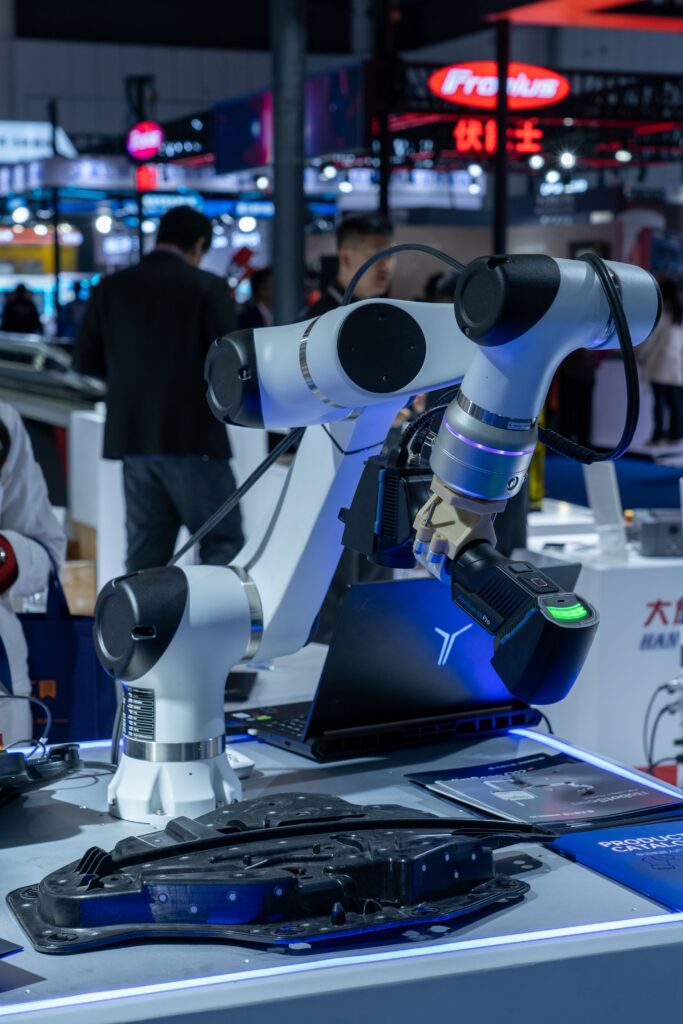
Advanced hand design is particularly important. Human hands are capable of incredibly complex movements, and Tesla has focused on creating robotic hands with many degrees of freedom to manipulate tools, packages, and equipment accurately.
The robot also includes sophisticated balance systems that allow it to walk, climb small steps, and recover from slight disturbances without falling. Also read about optimus Robot click HERE
Real-World Applications
One of the biggest strengths of Tesla Optimus is its versatility.
In manufacturing, it can transport materials, organize inventory, inspect products, and assist workers with repetitive assembly tasks. These activities help improve productivity while reducing workplace fatigue.
Warehouses and logistics centers could use Optimus for sorting packages, moving inventory, loading carts, and supporting order fulfillment around the clock.
Healthcare organizations may eventually use humanoid robots to deliver supplies, transport equipment, and assist medical staff with routine non-clinical tasks, allowing professionals to focus more on patient care.
Retail businesses could deploy robots for shelf organization, inventory counting, cleaning, and customer assistance during busy periods.
In agriculture, Optimus may support harvesting, crop monitoring, and transporting equipment across farms where labor shortages are common.
Future home applications could include carrying groceries, basic cleaning, organizing household items, and assisting elderly individuals with everyday activities.
Benefits of Tesla Optimus
Tesla Optimus offers several potential advantages.
First, it can perform repetitive tasks consistently without becoming physically tired, helping organizations increase efficiency and reduce operational costs.
Second, the robot can work in environments that may be dangerous for humans, including areas involving heavy lifting, hazardous materials, or extreme temperatures.
Another benefit is workforce support. Rather than replacing every human worker, Optimus is expected to complement employees by handling repetitive labor while people focus on creative problem-solving, supervision, and customer interaction.
Its software can also receive updates, allowing new capabilities to be added without replacing the hardware. As AI models improve, the robot may become increasingly capable through software alone.check on Amazon and get Enobot AI Robot Camera HERE
Challenges and Limitations
Despite its promise, Tesla Optimus still faces important challenges.
Human environments are unpredictable. A robot must safely navigate crowded spaces, unexpected obstacles, and changing conditions while interacting naturally with people.
Battery life remains another limitation. Longer operating times require improvements in battery technology without increasing the robot’s weight.
Cost is also a significant consideration. Early humanoid robots are expensive to manufacture, making widespread adoption dependent on lower production costs over time.
Ethical questions continue to receive attention as well. Businesses and governments must consider privacy, workplace safety, transparency, and the impact of automation on employment. Responsible AI development will remain essential as robots become more capable.
The Future of Tesla Optimus
The future of Tesla Optimus depends on continued advances in robotics and artificial intelligence.
As AI models become more intelligent, robots will likely perform increasingly complex tasks with less human supervision. Improvements in computer vision, dexterity, reasoning, and language understanding could enable Optimus to operate across many industries.
Future versions may work collaboratively with humans in offices, hospitals, warehouses, hotels, construction sites, and homes. Robots capable of learning new skills through demonstration rather than manual programming could significantly accelerate adoption.
While fully autonomous humanoid robots are still developing, Tesla’s work has accelerated global investment in robotics. Competition among technology companies is expected to drive innovation, reduce costs, and expand practical applications over the coming years.
Frequently Asked Questions
- What is Tesla Optimus?
Tesla Optimus is a humanoid robot developed by Tesla to perform repetitive, dangerous, and physically demanding tasks using artificial intelligence, computer vision, and robotics.
- How does Tesla Optimus work?
It combines cameras, sensors, neural networks, electric actuators, and onboard AI computers to perceive its surroundings, make decisions, and perform tasks safely.
- Is Tesla Optimus powered by artificial intelligence?
Yes. Artificial intelligence enables the robot to recognize objects, understand environments, plan movements, and improve performance through machine learning.
- What jobs can Tesla Optimus perform?
Potential tasks include manufacturing, warehouse logistics, inventory management, inspection, cleaning, material handling, retail assistance, and certain household activities.
- Can Tesla Optimus replace human workers?
The goal is primarily to automate repetitive or hazardous work while allowing humans to focus on higher-value tasks requiring creativity, judgment, and interpersonal skills.
- Does Tesla Optimus use large language models?
Modern robotics increasingly incorporates large language models for natural communication, enabling users to interact with robots using conversational language.
- Is Tesla Optimus available to consumers?
As of 2026, Tesla Optimus remains under development, with deployment focused on testing and industrial applications before broader availability.
- What industries could benefit from Tesla Optimus?
Manufacturing, logistics, healthcare, agriculture, retail, hospitality, construction, and home assistance are among the industries expected to benefit.
- What are the biggest challenges facing Tesla Optimus?
Current challenges include affordability, battery life, complex human environments, safety, dexterity, and responsible AI governance.
- Why is Tesla Optimus important?
Tesla Optimus represents a major step toward practical humanoid robotics that could improve productivity, reduce workplace injuries, and reshape how people collaborate with intelligent machines.
Disclaimer
Technology evolves rapidly, and the capabilities of Tesla Optimus continue to change as new hardware and software are developed. The information in this guide is intended for educational purposes only and reflects current knowledge and technology developments as of 2026. Readers should verify important technical details through trusted official sources before making business, investment, or technical decisions. This article should not be considered professional engineering, financial, or technical advice.
Final Thoughts
Tesla Optimus represents an exciting vision for the future of intelligent robotics. By combining artificial intelligence, machine learning, computer vision, and advanced engineering, Tesla is working toward a humanoid robot capable of assisting people in industries ranging from manufacturing to healthcare and beyond.
Although challenges such as cost, safety, and technical complexity remain, rapid advances in AI and robotics suggest that humanoid robots will become increasingly practical in the coming years. Whether supporting businesses or helping individuals with everyday tasks, Tesla Optimus highlights how intelligent machines could reshape the future of work and daily life. Staying informed about these emerging technologies will help individuals and organizations prepare for a world where humans and AI-powered robots collaborate more closely than ever before.