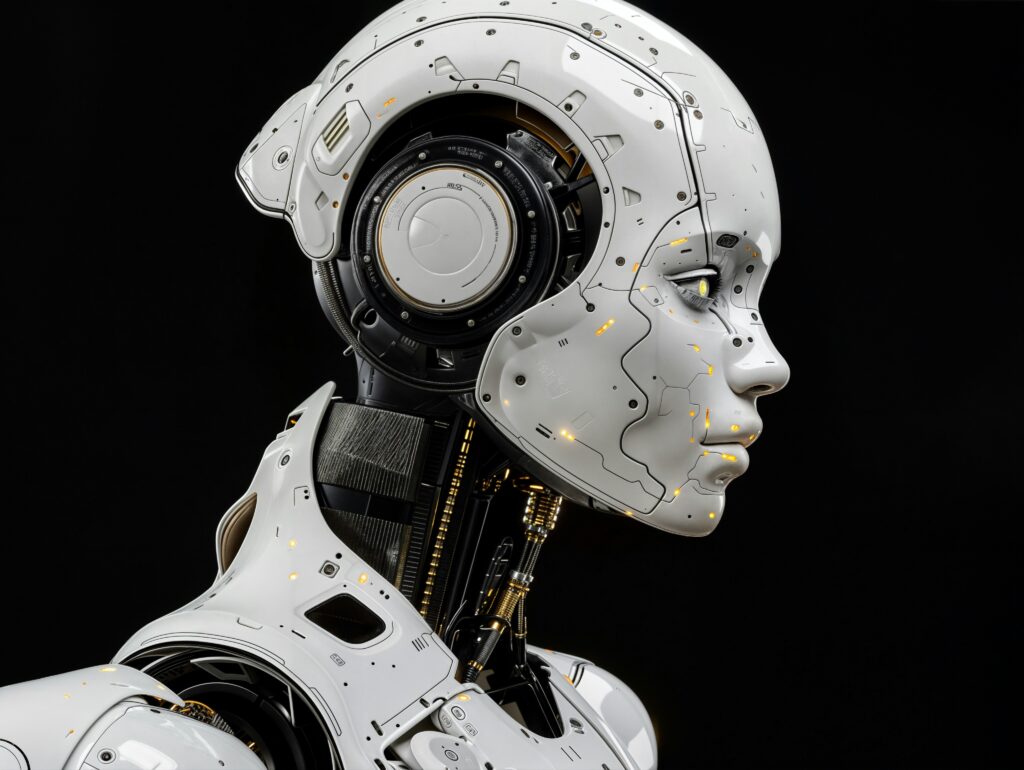

Enterprise AI Solutions: How Businesses Are Using Artificial Intelligence in 2026
Enterprise AI solution has become one of the most important business technologies of the modern era. What was once considered an experimental innovation is now a strategic necessity for organizations seeking to improve efficiency, reduce costs, increase productivity, and remain competitive in an increasingly digital economy.
In 2026, enterprise AI solutions are no longer limited to large technology companies. Businesses of all sizes are adopting AI-powered tools to automate workflows, analyze massive volumes of data, improve customer experiences, strengthen cybersecurity defenses, and support better decision-making across departments.
The rapid evolution of cloud computing, machine learning, generative AI, and intelligent automation has made artificial intelligence more accessible than ever before. As a result, organizations are integrating AI into everyday business operations, transforming how work is performed and how value is created.
This guide explores how enterprise AI solutions are being used in 2026, the benefits and challenges of adoption, key industry applications, emerging trends, and what the future holds for AI-powered businesses.
What Are Enterprise AI Solutions?
Enterprise AI solutions are artificial intelligence technologies designed specifically for organizational and business use. Unlike consumer-focused AI applications, enterprise AI systems are built to support complex operations, large datasets, multiple users, regulatory requirements, and enterprise-level security standards.
These solutions combine technologies such as machine learning, predictive analytics, natural language processing, computer vision, intelligent automation, and generative AI to help organizations solve business problems and improve operational performance.
Enterprise AI can perform tasks such as:
- Analyzing business data
- Automating repetitive processes
- Predicting future trends
- Improving customer support
- Detecting fraud
- Managing supply chains
- Enhancing cybersecurity
- Assisting employees with daily tasks
Rather than replacing human workers, enterprise AI is increasingly being used to augment human capabilities and improve organizational efficiency.
Why Enterprise AI Adoption Is Growing Rapidly in 2026
The demand for enterprise AI solutions continues to accelerate as businesses face increasing pressure to improve efficiency, reduce costs, and deliver better customer experiences.
One of the primary reasons for AI adoption is the growing volume of business data. Organizations generate vast amounts of information every day through customer interactions, transactions, marketing campaigns, operations, and digital platforms. Traditional systems often struggle to process this data effectively, while AI can identify patterns and generate valuable insights within seconds.
Another major factor is the rise of generative AI. Businesses can now leverage advanced AI systems to create content, summarize reports, generate code, assist customer service teams, and automate knowledge-based work.
Organizations are also adopting AI because of labor shortages, rising operational costs, and increasing customer expectations. AI enables companies to do more with existing resources while maintaining high levels of service quality.
How Businesses Are Using AI to Improve Operations
Operational efficiency is one of the most significant benefits of enterprise AI.
Many organizations spend thousands of hours each year on repetitive administrative tasks that consume valuable employee time. Enterprise AI solutions help automate these activities, allowing teams to focus on strategic and creative work.
Examples of operational AI applications include:
- Automated invoice processing
- Document classification
- Data extraction
- Workflow automation
- Compliance monitoring
- Report generation
- Inventory tracking
- Meeting scheduling
By automating routine processes, businesses can reduce errors, improve consistency, and increase overall productivity.
Organizations that successfully implement AI-driven automation often achieve significant cost savings while improving operational performance.
AI-Powered Customer Service and Support
Customer expectations have changed dramatically in recent years. Consumers expect fast, personalized, and convenient service at any time of day.
Enterprise AI solutions are helping organizations meet these expectations through intelligent customer support systems.
AI-powered customer service tools can:
- Respond to inquiries instantly
- Operate 24/7
- Handle multiple conversations simultaneously
- Personalize responses
- Analyze customer sentiment
- Route complex issues to human agents
Modern AI assistants can understand natural language, remember conversation context, and provide accurate responses across multiple channels, including websites, mobile apps, messaging platforms, and email.
As a result, businesses can improve customer satisfaction while reducing support costs.
Generative AI and Business Productivity
Generative AI has emerged as one of the most transformative technologies in enterprise environments.
Unlike traditional AI systems that focus primarily on analysis and prediction, generative AI can create original content, assist with research, and help employees complete complex tasks faster.
Organizations are using generative AI to:
- Draft reports
- Create marketing content
- Generate presentations
- Summarize meetings
- Write software code
- Develop product documentation
- Produce business proposals
- Analyze research materials
Many companies have deployed AI copilots that function as digital assistants for employees. These systems help workers complete tasks more efficiently, improve productivity, and reduce administrative burdens.
As generative AI capabilities continue to advance, businesses are finding new ways to integrate these tools into daily workflows.
AI in Marketing and Sales
Marketing and sales teams are among the biggest beneficiaries of enterprise AI.
Modern consumers generate enormous amounts of behavioral data through websites, social media platforms, mobile applications, and online purchases. AI helps businesses analyze this information and identify valuable opportunities.
Marketing teams use AI to:
- Personalize campaigns
- Create content
- Analyze customer behavior
- Improve targeting
- Optimize advertising budgets
- Predict customer preferences
Sales teams use AI to:
- Forecast revenue
- Identify qualified leads
- Analyze customer interactions
- Improve conversion rates
- Prioritize opportunities
AI-driven insights help organizations make more informed decisions and maximize the effectiveness of their marketing and sales strategies. Also learn about Artificial intelligence Assistance HERE
AI in Human Resources
Human resources departments are increasingly leveraging enterprise AI solutions to improve workforce management and talent acquisition.
Recruitment is one of the most time-consuming functions within HR. AI-powered systems can analyze resumes, identify qualified candidates, and streamline hiring processes.
Other HR applications include:
- Candidate screening
- Employee onboarding
- Skills assessment
- Workforce planning
- Employee engagement analysis
- Learning and development recommendations
By automating administrative tasks and providing data-driven insights, AI enables HR professionals to focus on strategic workforce initiatives.
AI in Supply Chain Management
Supply chain disruptions have highlighted the importance of intelligent planning and operational visibility.
Enterprise AI solutions help organizations optimize supply chains through advanced forecasting, predictive analytics, and real-time monitoring.
Businesses use AI to:
- Predict customer demand
- Manage inventory levels
- Optimize transportation routes
- Monitor supplier performance
- Reduce logistics costs
- Identify operational risks
AI-powered supply chain systems improve efficiency while helping organizations respond more effectively to unexpected disruptions.
AI in Healthcare Enterprises
Healthcare organizations are using artificial intelligence to improve patient care, streamline operations, and accelerate medical research.
Enterprise AI solutions support healthcare providers in numerous ways, including:
- Medical imaging analysis
- Disease detection
- Patient risk assessment
- Clinical workflow optimization
- Hospital resource management
- Drug discovery
AI systems can analyze vast amounts of medical data quickly and accurately, helping healthcare professionals make better-informed decisions.
As healthcare data continues to expand, AI is expected to play an even larger role in improving outcomes and reducing costs. Check on Amazon and get playbook for Enterprise AI HERE
AI in Financial Services

The financial sector has been a leader in AI adoption for many years.
Banks, insurance companies, investment firms, and fintech organizations rely on AI to analyze complex data, detect risks, and improve customer experiences.
Common applications include:
- Fraud detection
- Credit risk assessment
- Algorithmic trading
- Financial forecasting
- Compliance monitoring
- Customer support automation
AI enables financial institutions to make faster decisions while improving accuracy and security.
AI in Cybersecurity
Cybersecurity has become a top priority for organizations worldwide.
As cyber threats become more sophisticated, businesses are turning to AI-powered security solutions to strengthen their defenses.
Enterprise AI solutions can:
- Detect anomalies
- Identify threats in real time
- Monitor network activity
- Analyze vulnerabilities
- Automate incident response
- Reduce false positives
AI allows security teams to identify and respond to threats more quickly, reducing the potential impact of cyberattacks.
Key Benefits of Enterprise AI Solutions
Organizations investing in AI are experiencing measurable business benefits.
Increased Productivity
AI automates repetitive tasks, enabling employees to focus on more valuable work.
Better Decision-Making
AI provides actionable insights based on real-time data analysis.
Cost Savings
Automation reduces operational expenses and improves resource utilization.
Improved Customer Experience
AI helps organizations deliver faster, more personalized services.
Scalability
Businesses can manage growing workloads without significantly increasing staffing levels.
Competitive Advantage
Organizations that adopt AI successfully often outperform competitors in innovation, efficiency, and customer satisfaction.
Challenges of Enterprise AI Adoption
While enterprise AI offers significant benefits, implementation is not without challenges.
Data Quality
AI systems require accurate, reliable, and well-structured data to perform effectively.
Security Risks
Organizations must protect sensitive information used by AI systems.
Integration Complexity
Many businesses face challenges integrating AI into existing infrastructure.
Workforce Adaptation
Employees often require training to work effectively alongside AI technologies.
Regulatory Compliance
Organizations must comply with evolving regulations governing AI usage and data privacy.
Successful AI adoption requires careful planning, governance, and ongoing monitoring.
Enterprise AI Trends Shaping 2026
Several trends are influencing the future of enterprise AI.
AI Agents
Autonomous AI systems capable of completing multi-step tasks with minimal human intervention.
Multimodal AI
AI models that understand text, images, audio, and video simultaneously.
Industry-Specific AI
Specialized solutions designed for healthcare, finance, manufacturing, retail, and other industries.
Hyperautomation
The combination of AI, robotic process automation, and workflow technologies to automate entire business processes.
Responsible AI
Growing emphasis on transparency, fairness, accountability, and governance.
AI-Powered Decision Intelligence
Systems that help executives make strategic decisions based on advanced analytics and predictive modeling.
These trends are expected to drive the next wave of enterprise transformation.
Leading Enterprise AI Platforms in 2026
Businesses are leveraging a growing ecosystem of enterprise AI platforms.
Popular solutions include:
- Microsoft Copilot
- OpenAI Enterprise
- Google Gemini for Workspace
- Amazon Bedrock
- IBM watsonx
- Salesforce Einstein
- Oracle AI
- SAP Business AI
- ServiceNow AI
- Adobe Firefly Enterprise
These platforms provide organizations with powerful AI capabilities while maintaining enterprise-level security, compliance, and scalability.
The Future of Enterprise AI
The future of enterprise AI is not about replacing humans but enhancing human capabilities.
Organizations are increasingly adopting AI as a collaborative technology that assists employees, improves decision-making, and automates repetitive tasks.
In the coming years, AI is expected to become deeply integrated into business operations, enabling organizations to operate more efficiently, innovate faster, and respond more effectively to market changes.
Companies that invest in AI today are positioning themselves to compete in a rapidly evolving digital economy.
Enterprise AI will continue to reshape industries, redefine workflows, and create new opportunities for growth and innovation.
Frequently Asked Questions
What are enterprise AI solutions?
Enterprise AI solutions are artificial intelligence technologies designed to help businesses automate operations, analyze data, improve productivity, and support decision-making.
Why are businesses investing in AI in 2026?
Businesses are investing in AI to increase efficiency, reduce costs, improve customer experiences, strengthen cybersecurity, and gain competitive advantages.
How does AI improve productivity?
AI automates repetitive tasks, accelerates information processing, and assists employees with research, content creation, and analysis.
Which industries benefit most from enterprise AI?
Healthcare, finance, retail, manufacturing, logistics, cybersecurity, telecommunications, and education are among the industries benefiting significantly from AI adoption.
What is the future of enterprise AI?
The future of enterprise AI includes AI agents, hyperautomation, multimodal AI, intelligent decision-making systems, and deeper integration across business operations.
Disclaimer
Technology evolves rapidly, and enterprise AI solutions continue to advance at a fast pace. Features, capabilities, regulations, and best practices may change over time. Readers should verify important information using trusted industry resources, official documentation, and professional guidance. This article is intended for educational and informational purposes only and should not be considered legal, financial, technical, or professional business advice.
my final opinion
Enterprise AI solutions have become a driving force behind modern business transformation. Organizations across industries are using artificial intelligence to automate workflows, improve customer experiences, strengthen cybersecurity, optimize operations, and support strategic decision-making.
As AI technologies continue to evolve throughout 2026 and beyond, businesses that embrace innovation and invest in responsible AI adoption will be better positioned for long-term success. Whether improving productivity, enhancing customer engagement, or unlocking new growth opportunities, enterprise AI is rapidly becoming one of the most valuable tools available to modern organizations.