
AI in Small Business: The Complete 2026 Guide
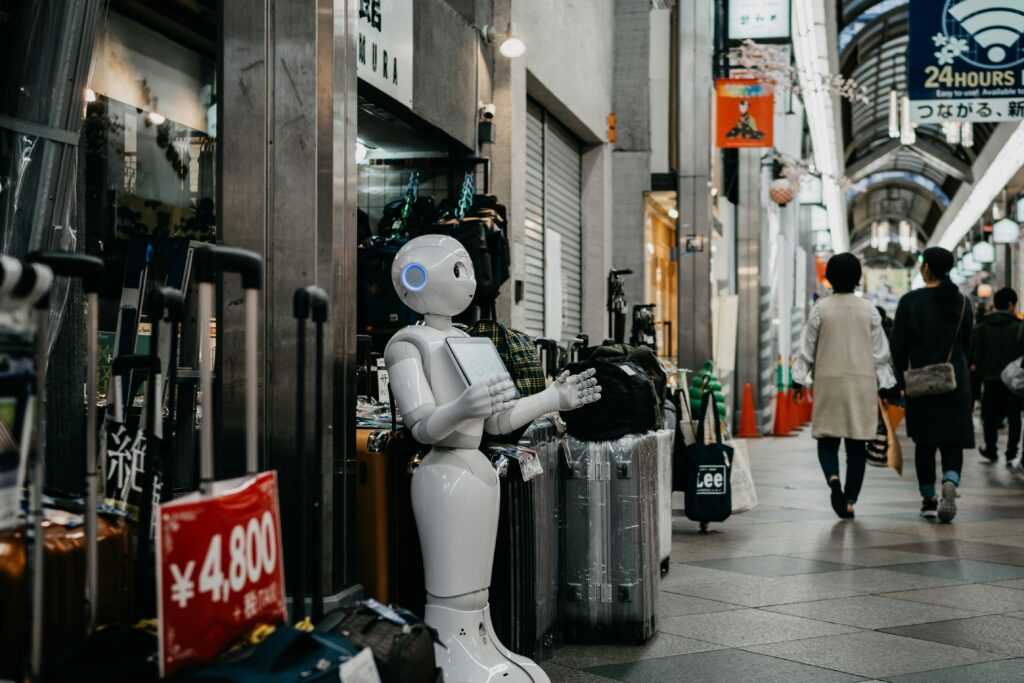
Artificial intelligence is no longer a technology reserved for large corporations with massive budgets. Today, AI in small business has become one of the biggest drivers of productivity, innovation, and business growth. From automating repetitive tasks to improving customer experiences, artificial intelligence is helping entrepreneurs compete more effectively in an increasingly digital marketplace.
Whether you own a retail store, manage an online business, operate a marketing agency, or run a local service company, AI offers practical solutions that reduce costs, increase efficiency, and create new opportunities for growth.
In recent years, cloud computing, machine learning, and generative AI have made advanced technologies more accessible than ever before. Small businesses can now use intelligent software to automate emails, generate marketing content, predict customer behavior, manage inventory, detect fraud, and provide 24/7 customer support through AI-powered chatbots.
This comprehensive guide explores everything you need to know about AI in small business, including how it works, where it delivers the greatest value, the best AI tools available in 2026, implementation strategies, benefits, risks, future trends, and practical advice for business owners.
This guide is based on industry-recognized AI research, educational resources, and current technology developments.
Featured Snippet Answer
AI in small business refers to the use of artificial intelligence technologies to automate tasks, improve decision-making, enhance customer service, increase productivity, and reduce operational costs. Small businesses use AI tools for marketing, sales, accounting, customer support, cybersecurity, inventory management, content creation, and business analytics. Modern AI solutions help businesses grow faster while allowing owners to focus on strategic activities rather than repetitive work.
Table of Contents
- Understanding AI in Small Business
- Why AI Matters for Small Businesses
- How AI Works in Small Business
- Types of AI Used by Small Businesses
- Core AI Technologies
- Benefits of AI in Small Business
- Challenges and Risks
- AI Applications Across Business Functions
- AI in Marketing
- AI in Sales
- AI in Customer Service
- AI in Finance
- AI in Human Resources
- AI in Inventory Management
- AI in Cybersecurity
- Best AI Tools in 2026
- AI Implementation Strategy
- Future of AI in Small Business
- Frequently Asked Questions
- Disclaimer
- Final Thoughts
Understanding AI in Small Business
Artificial intelligence refers to computer systems that perform tasks requiring human intelligence. These tasks include learning from data, recognizing patterns, understanding language, making predictions, solving problems, and generating content.
When discussing AI in small business, the focus shifts from complex research to practical applications that improve daily operations. Instead of hiring additional employees for repetitive work, businesses can automate many routine processes while improving speed and accuracy.
Modern AI platforms use machine learning algorithms, natural language processing, predictive analytics, and generative AI to assist business owners with tasks ranging from customer communication to financial forecasting.
Unlike traditional software that follows fixed instructions, AI continuously improves as it processes more information, making it increasingly valuable over time.
Why AI Matters for Small Businesses
Running a small business often means working with limited budgets, smaller teams, and significant competition. Every minute saved and every process optimized can have a meaningful impact on profitability.
AI helps level the playing field by providing capabilities that were once available only to large enterprises. Small businesses can now automate marketing campaigns, personalize customer experiences, forecast demand, analyze sales performance, and improve operational efficiency without investing in expensive infrastructure.
Businesses adopting AI often experience improved productivity because employees spend less time on repetitive administrative work and more time on creative, strategic, and customer-focused activities.
How AI Works in Small Business
Artificial intelligence operates by collecting and analyzing large volumes of data. This data may come from sales transactions, website visitors, customer interactions, financial reports, emails, inventory systems, or social media engagement.
Machine learning algorithms identify hidden patterns within this information and generate predictions or recommendations. Over time, the system continuously refines its performance as additional data becomes available.
For example, an online store can use AI to recommend products based on customer browsing behavior. A marketing platform can determine the best time to send promotional emails. Customer support software can instantly answer common questions using natural language understanding.
The overall process generally includes:
- Data collection
- Data processing
- Pattern recognition
- Model training
- Prediction generation
- Continuous learning
- Performance improvement
This cycle enables businesses to make faster, more informed decisions.
Types of AI Used by Small Businesses
Most small businesses rely on Narrow AI, also called weak AI. Narrow AI is designed to perform specific tasks extremely well, such as recognizing images, translating languages, writing content, or answering customer questions.
The primary categories include:
Machine Learning
Machine learning enables systems to learn from historical data without explicit programming. Businesses use it for forecasting, customer segmentation, fraud detection, and recommendation systems.
Natural Language Processing (NLP)
NLP allows computers to understand, interpret, and generate human language. It powers chatbots, virtual assistants, language translation, sentiment analysis, and document summarization.
Computer Vision
Computer vision enables machines to interpret visual information from images and videos. Retailers use it for inventory monitoring, quality inspections, and security surveillance.
Generative AI
Generative AI creates original text, images, code, presentations, videos, and audio. Businesses increasingly rely on it for content marketing, product descriptions, advertising campaigns, and brainstorming.
Core AI Technologies Behind Modern Business Solutions
Several advanced technologies power today’s AI systems.
Machine learning forms the foundation by enabling predictive analysis.
Deep learning uses neural networks with multiple layers to solve complex recognition problems.
Large Language Models (LLMs) understand and generate natural language, making conversational AI possible.
Natural language processing allows AI to communicate effectively with users.
Predictive analytics forecasts future trends based on historical data.
Cloud computing provides scalable computing resources without requiring businesses to purchase expensive servers.
Together, these technologies make AI accessible to organizations of every size. Also check here on amazon an get AI voice recorder earbuds HERE
Benefits of AI in Small Business
One of the greatest advantages of AI is increased productivity. Automation eliminates repetitive tasks such as scheduling meetings, organizing emails, processing invoices, and generating reports.
AI also improves decision-making by analyzing data far more quickly than humans. Business owners receive insights into customer preferences, sales performance, inventory trends, and financial risks.
Customer service improves through AI chatbots that provide instant support around the clock. This leads to faster response times and greater customer satisfaction.
Marketing becomes more personalized because AI analyzes user behavior and delivers relevant recommendations, increasing engagement and conversion rates.
Businesses also reduce operational costs by minimizing manual work, improving efficiency, reducing errors, and optimizing resource allocation.
Another significant advantage is scalability. As businesses grow, AI systems handle increasing workloads without requiring proportional increases in staffing.
Challenges and Risks
Despite its many benefits, implementing AI requires careful planning.
Data privacy remains one of the most significant concerns. Businesses must protect sensitive customer information and comply with applicable regulations.
AI systems may also produce inaccurate or biased outputs if trained on incomplete or poor-quality data.
Employees often require training to use AI tools effectively, making education an important part of implementation.
Overreliance on automation can reduce human oversight, making it essential to review important decisions before taking action.
Cybersecurity risks also increase as businesses adopt more digital technologies, requiring strong security practices.
Responsible AI use combines automation with human judgment rather than replacing people entirely.
AI Applications Across Business Functions
AI in Marketing
Artificial intelligence supports nearly every department within a modern small business.
Marketing teams use AI for content creation, SEO optimization, audience segmentation, and campaign management.
Sales departments analyze customer behavior and identify high-value prospects.
Finance teams automate bookkeeping, budgeting, and expense tracking.
Operations managers optimize inventory levels and supply chains.
Customer service representatives resolve inquiries more efficiently using AI-powered assistants.
Human resource teams screen resumes and schedule interviews.
Executives use AI dashboards for strategic planning and forecasting.
This widespread adoption demonstrates how AI has become an essential business technology rather than a specialized tool.
AI in Marketing
Marketing is one of the areas where AI delivers immediate value.
AI analyzes customer demographics, purchase histories, website interactions, and engagement metrics to create personalized marketing campaigns.
Generative AI assists businesses in writing blog articles, email newsletters, product descriptions, advertising copy, and social media posts while maintaining consistent branding.
Predictive analytics helps identify which marketing strategies are likely to generate the highest return on investment.
SEO professionals use AI to perform keyword research, optimize content, analyze competitors, and identify emerging search trends.
These capabilities allow even small marketing teams to compete with much larger organizations.
AI in Sales
Sales teams increasingly rely on AI to improve efficiency throughout the customer journey.
Lead scoring systems identify prospects most likely to convert into paying customers.
AI recommends personalized offers based on purchasing behavior.
Sales forecasting models predict future revenue using historical performance and market trends.
Conversation intelligence platforms analyze customer interactions to improve communication strategies and sales performance.
By automating administrative tasks, sales professionals spend more time building relationships with customers.
AI in Customer Service
Exceptional customer service remains essential for business success.
AI-powered chatbots answer frequently asked questions instantly, reducing wait times while remaining available around the clock.
Virtual assistants can schedule appointments, process orders, provide shipping updates, and escalate complex issues to human representatives when necessary.
Sentiment analysis helps businesses understand customer satisfaction by analyzing reviews, surveys, and social media comments.
This combination of automation and human support creates faster, more consistent customer experiences.
AI in Finance
Financial management becomes more efficient through AI-driven automation.
Businesses use AI for invoice processing, bookkeeping assistance, expense categorization, budgeting, revenue forecasting, and fraud detection.
Predictive analytics helps owners anticipate cash flow challenges before they occur.
Financial dashboards present complex business metrics in simple visual formats, making strategic planning easier.
These tools reduce administrative workloads while improving financial accuracy.
AI in Human Resources
Recruitment and employee management have also benefited from AI.
Resume screening software identifies qualified candidates more efficiently.
AI scheduling tools coordinate interviews automatically.
Learning platforms personalize employee training programs based on individual skill gaps.
Workforce analytics provide insights into employee performance, retention, and productivity trends.
Although AI supports hiring decisions, final evaluations should always involve human judgment.
AI in Inventory Management
Retailers and manufacturers increasingly depend on AI to optimize inventory.
Demand forecasting predicts future purchasing patterns using seasonal trends and historical sales data.
Automated inventory systems recommend reorder quantities before products become unavailable.
AI also helps reduce waste by identifying slow-moving inventory and optimizing warehouse operations.
Better inventory management improves customer satisfaction while lowering storage costs.
AI in Cybersecurity
As businesses become more digital, cybersecurity grows increasingly important.
AI monitors networks continuously to detect suspicious activity.
Machine learning identifies unusual login attempts, malware behavior, phishing attacks, and unauthorized access.
Automated threat detection allows businesses to respond more quickly than traditional security systems.
Although AI strengthens cybersecurity, organizations should continue following established security best practices. also learn more about AI in business HERE
Best AI Tools in 2026
The AI software landscape continues expanding rapidly.
Popular categories include conversational AI assistants, writing assistants, customer support platforms, marketing automation systems, CRM intelligence, financial automation software, design tools, meeting assistants, coding assistants, analytics platforms, and workflow automation solutions.
The best tool depends on business objectives, budget, industry, and existing technology infrastructure.
Rather than adopting numerous AI applications simultaneously, businesses often achieve better results by starting with one or two high-impact solutions before expanding gradually.
How to Successfully Implement AI
Successful AI adoption begins with identifying repetitive tasks that consume significant employee time.
Business owners should establish measurable goals, such as reducing response times, increasing sales conversions, or improving operational efficiency.
Selecting reliable AI platforms with strong security practices is equally important.
Employees should receive proper training to maximize adoption while understanding AI’s strengths and limitations.
Performance metrics should be monitored regularly so businesses can refine their implementation strategy over time.
Continuous evaluation ensures AI investments deliver measurable business value.
The Future of AI in Small Business
The future of AI in small business looks exceptionally promising.
Generative AI will become more capable of producing high-quality business content, presentations, software code, marketing campaigns, and customer communications.
AI agents will automate increasingly complex workflows by coordinating multiple business applications simultaneously.
Predictive analytics will become even more accurate as businesses generate larger datasets.
Voice interfaces, multimodal AI, intelligent automation, and personalized customer experiences will continue reshaping industries.
Businesses that begin learning and adopting AI today will likely gain significant competitive advantages as technology continues evolving.
Rather than replacing entrepreneurs, AI will increasingly serve as a trusted digital assistant that enhances productivity, creativity, and strategic decision-making.

Frequently Asked Questions
- What is AI in small business?
AI in small business refers to using artificial intelligence technologies to automate routine work, improve customer service, analyze business data, enhance marketing, optimize operations, and support better decision-making. Modern AI tools are affordable and accessible to businesses of all sizes.
- Is AI expensive for small businesses?
Not necessarily. Many AI platforms offer affordable subscription plans, and cloud-based services eliminate the need for expensive hardware. Businesses can start with low-cost solutions and expand as they grow.
- Can AI replace employees?
AI is designed to automate repetitive tasks rather than replace every employee. Human creativity, leadership, empathy, and critical thinking remain essential for successful businesses.
- Which industries benefit most from AI?
Retail, healthcare, finance, education, logistics, hospitality, professional services, manufacturing, marketing, and e-commerce all benefit significantly from AI technologies.
- Is AI secure?
Most reputable AI platforms implement strong security measures. However, businesses should protect sensitive information, use secure passwords, enable multi-factor authentication, and follow cybersecurity best practices.
- What skills are needed to use AI?
Basic digital literacy is usually sufficient for many AI tools. More advanced applications may require knowledge of data analysis, prompt engineering, automation, or programming.
- Can AI improve customer service?
Yes. AI chatbots, virtual assistants, and intelligent help desks provide faster responses, personalized recommendations, and 24/7 support while reducing workloads for customer service teams.
- What are the biggest challenges of AI adoption?
Common challenges include employee training, data privacy, implementation costs, integration with existing systems, maintaining data quality, and ensuring responsible AI use.
- How should a business begin using AI?
Start by identifying repetitive tasks that consume valuable time. Select one reliable AI solution, train employees, monitor results, and gradually expand implementation based on measurable business outcomes.
- What is the future of AI for entrepreneurs?
AI will continue becoming more intelligent, affordable, and integrated into everyday business operations. Entrepreneurs who understand AI and adopt it responsibly are likely to improve productivity, innovation, and long-term competitiveness.
Disclaimer
Artificial intelligence technologies evolve rapidly, and new tools, capabilities, and industry standards emerge frequently. While every effort has been made to provide accurate and up-to-date educational information, readers should verify important technical, legal, financial, and business decisions using trusted official sources and qualified professionals where appropriate. This article is intended for educational purposes only and should not be considered professional technical, legal, or business advice.
conclusion
Artificial intelligence technologies evolve rapidly, and new tools, capabilities, and industry standards emerge frequently. While every effort has been made to provide accurate and up-to-date educational information, readers should verify important technical, legal, financial, and business decisions using trusted official sources and qualified professionals where appropriate. This article is intended for educational purposes only and should not be considered professional technical, legal, or business advice.
Final Thoughts
Artificial intelligence is transforming the way small businesses operate, compete, and grow. What was once considered an advanced technology for multinational corporations has become an accessible resource for entrepreneurs, startups, and local businesses seeking greater efficiency and stronger customer relationships.
By automating repetitive tasks, improving decision-making, enhancing customer experiences, and providing valuable business insights, AI enables small organizations to accomplish more with fewer resources. At the same time, successful adoption requires thoughtful planning, responsible data management, employee training, and continuous evaluation to ensure that technology supports—not replaces—human expertise.
As AI capabilities continue to evolve throughout 2026 and beyond, businesses that embrace continuous learning and strategic implementation will be better positioned to adapt to changing market conditions and seize new opportunities. Whether you are just beginning your AI journey or looking to expand existing capabilities, investing time in understanding and applying artificial intelligence can provide lasting competitive advantages and support sustainable long-term growth.